Sham
Thoughts on poets, neutrality and 'political iridescence'

I listened to Karan Mahajan talk on the Granta podcast about his own political neutrality this morning. He spoke about being a neutral vessel for his characters’ various opinions on Khalistani separatism, Indira Gandhi, and Hindu nationalism. This comforted me; it made me feel like underneath my own histrionics over India and Modi’s horrific regime, there was a network of sense being made by calm, dispassionate diasporic writers who knew the situation far better than I did. That, in fact, a whole lineage of dispassion and political ambivalence exists amongst Indian novelists, latently, sensibly waiting for me draw upon. The notion that poets, conversely, are not sensible about their lives, emotions, or politics, was once again revealing itself to me. But it still seemed right to continue writing poetry in light of this revelation. To consciously choose a medium of nonsense, populated by overly sincere idiots who selfishly choose their own emotions over a more altruistic objectivity. At the most anti-charismatic and self-aggrandising point of my morning, I began to think of myself as an emissary of sense into nonsense. As being a neutral, dispassionate vessel for currents of obsession and irrationality, and thus ultimately achieving polyvocality. Like Orpheus’ severed head floating down the River Hebrus, sieving water in and out of his mouth.
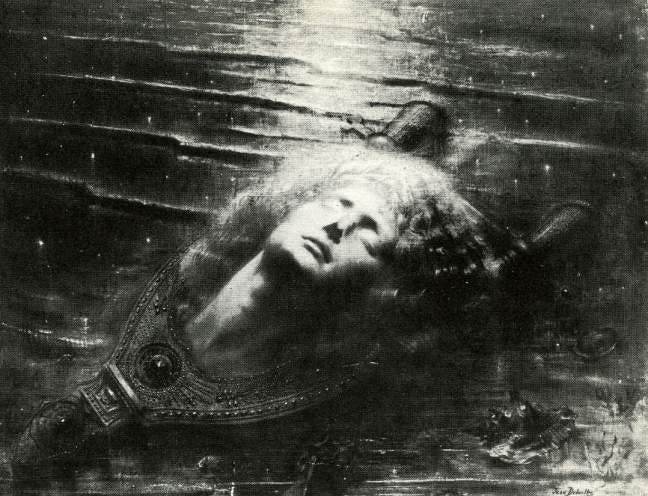
The Head of Orpheus by Jean Delville.
Obviously after such loftiness things took a turn for the worse. I easily began to identify what makes me just as moronic and gushy as the rest of my cohort. I write and send handwritten letters to my friends. My favourite novel is Evelyn Waugh’s Brideshead Revisited. Most damningly, I occasionally find myself moved to tears on the tube when randomly remembering tales of Lord Krishna’s youth. I was raised Hindu, by a diasporic single father who could barely suppress his vague longing for the homeland. I have naive, overly emotional nationalism in my bones. Of the crime I loathe most deeply, I am an offender of the highest degree. But then again, could I not hold this sentimental Hindu nationalist conditioning (as Mahajan held, say, a character’s desire to bomb a temple) up to the light? Watch it change from turquoise to pink and marvel at my own political iridescence?
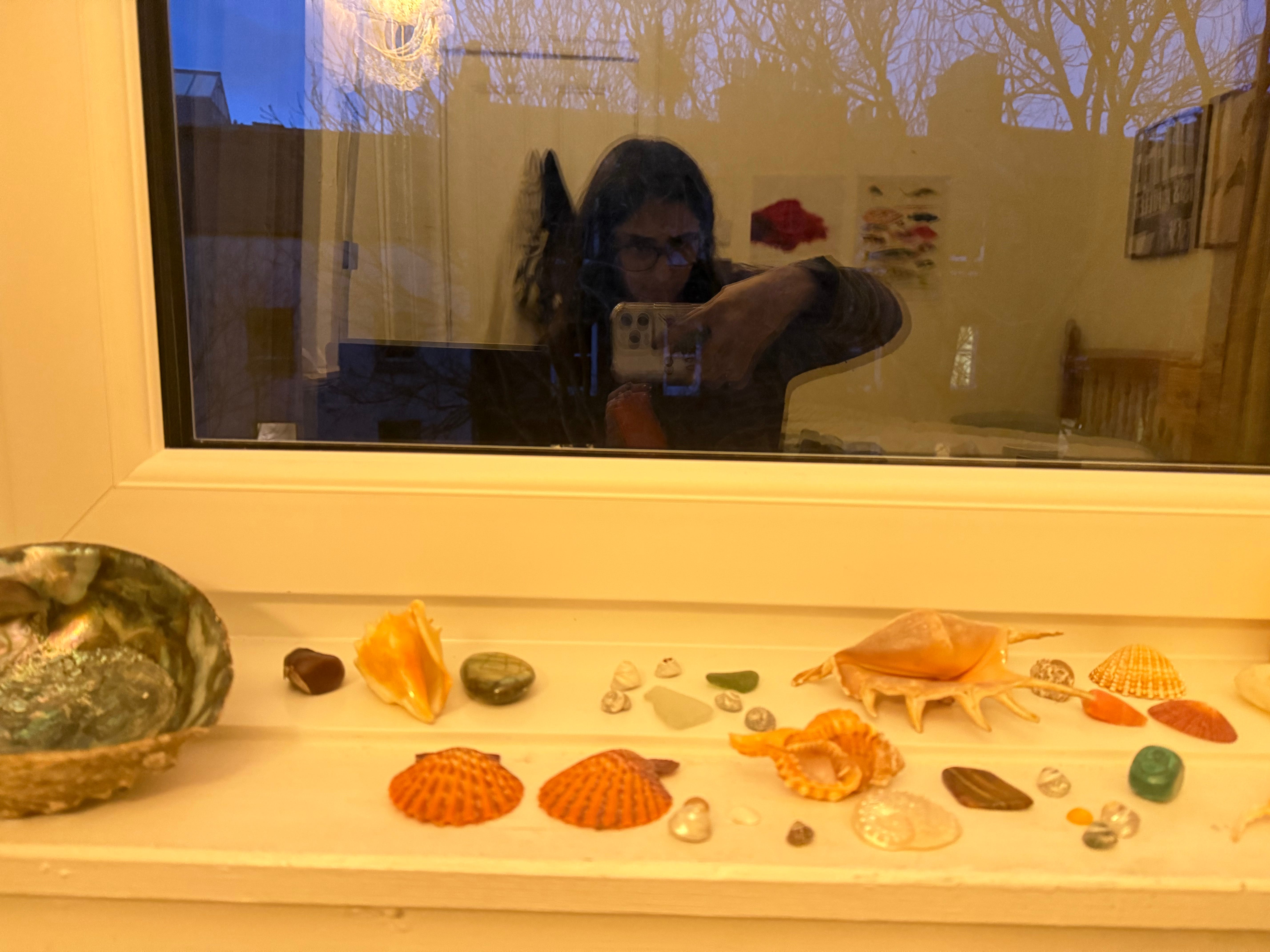
My collection of shells, featuring an iridescent abalone and some iridescent small moon shells.
This was an idea I had formulated at the pub one time and been extremely proud of. A friend even reused the phrase for her PhD proposal. This morning, as I was wondering if self-congratulation was more of a prosaic or poetic tendency, it dawned on me in horror that the phrase was not my own. The phrase was John Cheever’s, the American short story writer who referred to his own bisexuality as his sexual iridescence. For months, whenever I remembered it, I had secretly thought to myself, how clever you are, to be the sort of person that could come up with a phrase like that on the spot at the pub merely to stimulate and amuse your friends; in fact, how deeply you deserve to think of yourself as a poet, for such wonderful little phrases like that exist always at the tip of your tongue. This morning, I concluded that I am a sham, and at my absolute best, I am an empty vessel for holding other people’s brilliance. As it trickles in through my ears and drains out of my mouth, it occurs to me that this is the condition of most poets.